
Imagine a transport slowdown during a fuel crisis. Buses run fewer trips. Deliveries arrive late. Workers struggle to get to their jobs. Families wait longer for basic goods. In that setting, a labor dispute does not affect only one employer and one group of employees. It can also disrupt daily life on a much wider scale.
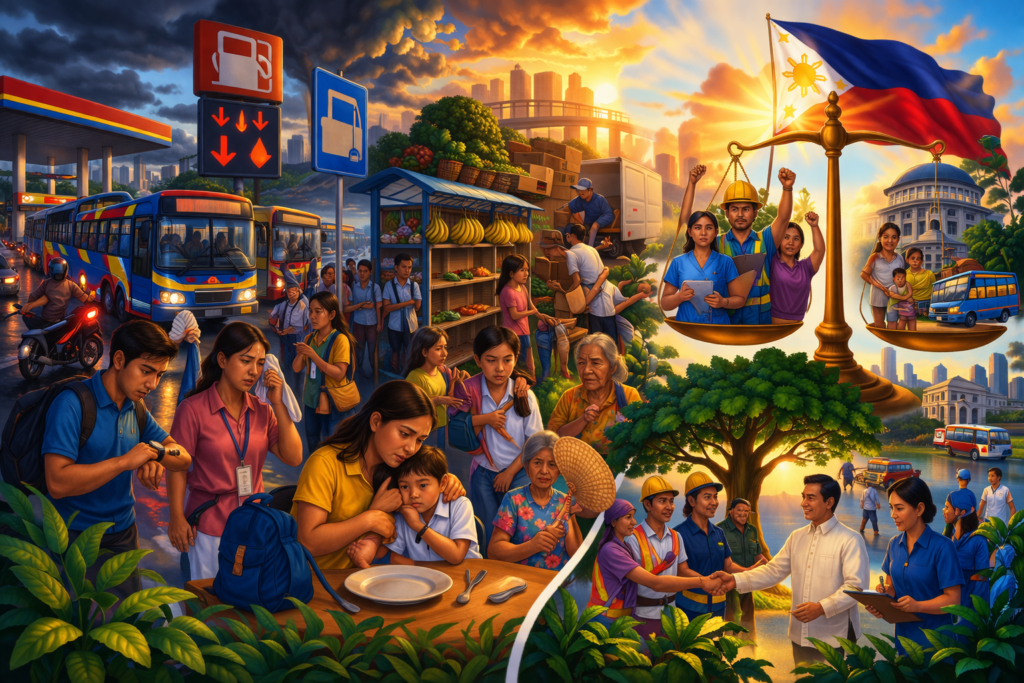
That reality explains why this issue matters in the Philippines. The law protects workers and recognizes their right to organize, bargain collectively, and strike. At the same time, the law also allows the State to step in when a labor dispute threatens the broader public interest. This legal balance becomes even more important during periods of economic strain, supply disruption, or national emergency. The Constitution and the Labor Code both reflect that balance. The Constitution protects labor rights, while the Labor Code seeks to promote employment and industrial peace based on social justice.
The Legal Doctrine
The starting point is Article XIII, Section 3 of the 1987 Constitution. It directs the State to give full protection to labor. It also guarantees the rights of workers to self-organization, collective bargaining, and peaceful concerted activities, including the right to strike in accordance with law. In addition, it protects security of tenure, humane conditions of work, and a living wage. Just as importantly, it encourages voluntary dispute settlement, including conciliation, to promote industrial peace.
The Labor Chttps://lawphil.net/statutes/presdecs/pd1974/pd_442_1974.html?utm_source=chatgpt.comode of the Philippines builds on that constitutional policy. It states that the law aims to afford protection to labor, promote employment and human resources development, and insure industrial peace based on social justice. In other words, Philippine labor law does not protect labor rights in a vacuum. It also considers the public interest and the stability of essential services.
The Supreme Court has clarified how this balance works.
In University of San Agustin Employees’ Union-FFW v. Court of Appeals,
the Court recognized that once the Secretary of Labor assumes jurisdiction over a labor dispute in an industry considered indispensable to the national interest, a strike may be enjoined. The parties must obey that order. This ruling shows that the government may lawfully intervene when a work stoppage in a critical sector threatens broader public welfare. That doctrine becomes especially relevant during fragile economic periods or national emergencies, when disruptions in transport, fuel, utilities, or logistics can affect entire communities.
On the other hand, San Miguel Corporation v. NLRC clarifies an equally important point.
The Court treated a strike as legally grounded only on bargaining deadlock or unfair labor practice. Therefore, even if workers face rising prices, high fuel costs, or severe economic pressure, those hardships do not automatically make every strike lawful. The legal ground still matters. Workers may have real grievances, but the law still requires a recognized basis for a valid strike.
Taken together, these rules show a consistent principle. Philippine law protects labor rights, but it also channels labor action through legal standards. It does not allow unrestricted disruption, especially when essential industries and the public interest are at stake.
For labor disputes involving essential industries and possible limits on strikes, these are the core legal points:
- The Constitution protects labor rights. Workers have rights to self-organization, collective bargaining, and peaceful concerted activities, including the right to strike in accordance with law.
- The Labor Code promotes both labor protection and industrial peace. The law aims to balance social justice with economic stability.
- A strike must rest on a recognized legal ground. Under San Miguel Corporation v. NLRC, the recognized grounds are:
- bargaining deadlock, or
- unfair labor practice.
- The State may intervene in disputes affecting essential industries. Under the doctrine reflected in University of San Agustin Employees’ Union-FFW v. Court of Appeals, the Secretary of Labor may assume jurisdiction over a dispute in an industry considered indispensable to the national interest, and the parties must comply.
- The right to strike is protected, but not absolute. The Constitution itself qualifies that right by saying it must be exercised in accordance with law.
Common Misconceptions
Myth 1: If an industry is important, workers lose the right to strike.
Not exactly. The law still recognizes workers’ rights. However, the right to strike operates within legal limits. In industries considered indispensable to the national interest, the State may step in and assume jurisdiction over the dispute. Once that happens, the parties must obey the order. University of San Agustin Employees’ Union-FFW v. Court of Appeals illustrates that rule clearly.
Myth 2: Economic hardship always justifies a strike.
That is also incorrect. Workers may suffer real hardship during inflation, oil price spikes, or supply disruptions. Even so, San Miguel Corporation v. NLRC teaches that a lawful strike still requires a recognized legal basis, specifically bargaining deadlock or unfair labor practice. Economic pressure alone does not automatically satisfy that requirement.
The main takeaway is straightforward. Philippine law strongly protects workers, but it does not treat the right to strike as unlimited. The Constitution recognizes that right, yet it requires compliance with law. The Labor Code reinforces that framework. The Supreme Court then gives the doctrine practical force through cases like University of San Agustin Employees’ Union-FFW v. Court of Appeals and San Miguel Corporation v. NLRC.
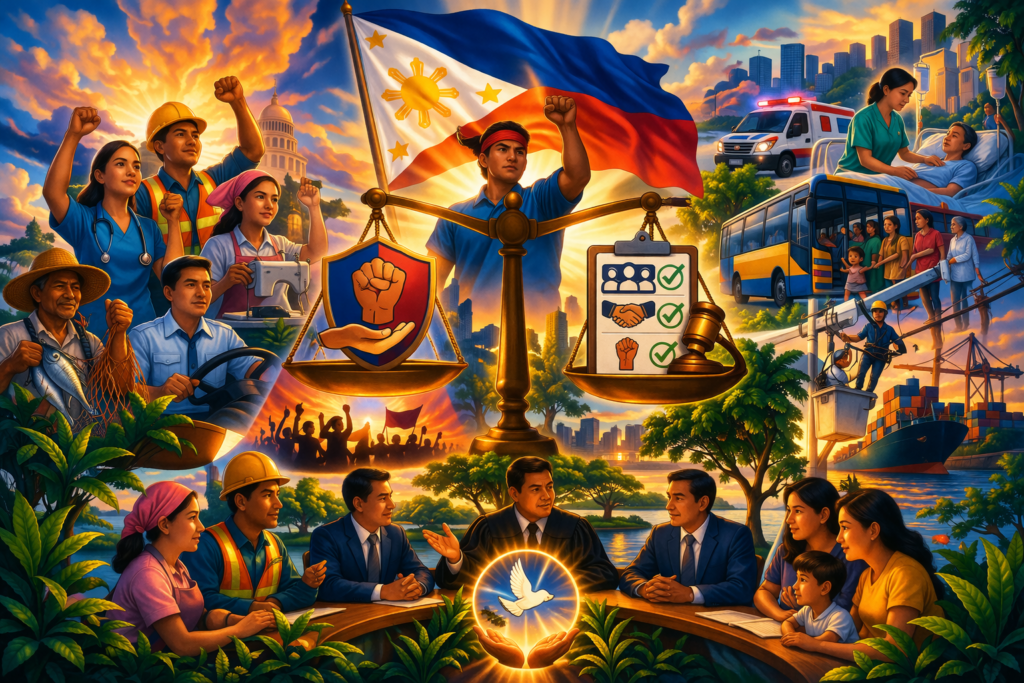
As a result, labor disputes in essential industries demand careful legal analysis. Workers, employers, and the public all have important interests at stake. The law seeks to protect those interests without sacrificing order, fairness, or social justice.
Leave a Reply