
A familiar scene now plays out in many Filipino homes. Grocery bills rise. Transport costs stretch daily budgets. Rent, utilities, and school expenses demand more each month. Yet many workers still bring home roughly the same pay. As a result, frustration builds not only in households but also in workplaces.
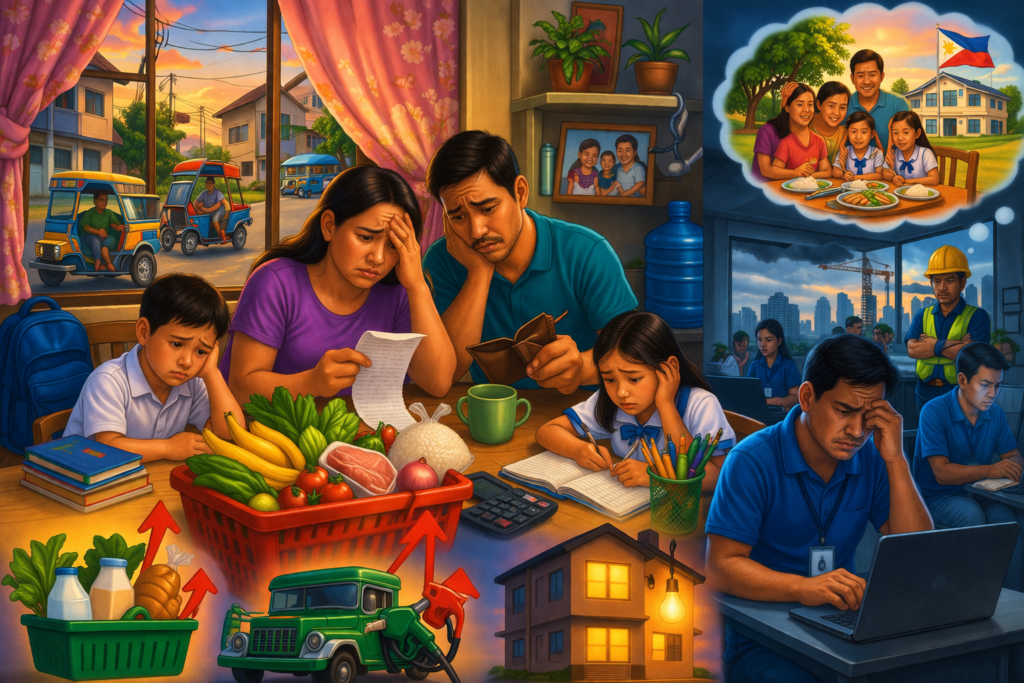
This issue matters because wages do not exist in isolation. They affect food on the table, rent payments, children’s schooling, and a family’s sense of security. In the Philippines, the law does not treat labor as a mere business input. The Constitution and the Labor Code recognize labor as a protected social interest. That legal framework becomes especially important when the cost of living rises while wages remain stagnant.
The Legal Doctrine
Philippine labor policy starts with the 1987 Constitution. Under Article XIII, Section 3, the State must give full protection to labor. It must also guarantee workers’ rights to self-organization, collective bargaining, and peaceful concerted activities, including the right to strike in accordance with law. Moreover, the Constitution protects security of tenure, humane conditions of work, and a living wage. At the same time, it directs the State to prefer voluntary dispute settlement, including conciliation, in order to promote industrial peace
The statutory foundation appears in the Labor Code of the Philippines. The Code expressly states that it exists to afford protection to labor, promote employment, and insure industrial peace based on social justice. That policy matters in any discussion about low wages and rising living costs because it confirms that labor law aims to balance economic activity with worker protection.
Still, the law draws clear lines. Economic hardship alone does not automatically convert worker dissatisfaction into a legally protected strike.
In San Miguel Corporation v. NLRC, the Supreme Court emphasized a basic rule: a strike must rest on either a bargaining deadlock or an unfair labor practice. That ruling is important in today’s climate. Even when workers face real pressure from inflation and stagnant wages, the legal system still requires a recognized ground before a strike gains protection under labor law.
interest. In University of San Agustin Employees’ Union-FFW v. Court of Appeals, the Supreme Court recognized that once the Secretary of Labor assumes jurisdiction over a labor dispute in an industry considered indispensable to the national interest, a strike may no longer continue. Parties must obey that order, and defiance carries serious legal consequences. That doctrine shows how the government may respond when labor unrest collides with a fragile economy or a wider national crisis.
Why This Doctrine Matters During a Cost-of-Living Crisis
A cost-of-living crisis often pushes workers to demand wage increases, allowances, or other relief. Those demands are understandable. In fact, the Constitution’s reference to a living wage gives that concern moral and legal weight. However, the legal framework still channels labor conflict through specific rules.
Therefore, when wages remain stagnant, workers and employers should not treat every disagreement as an immediate strike issue. Instead, the law encourages organized action through collective bargaining, lawful concerted activity, and dispute-settlement mechanisms. In that sense, Philippine labor law tries to protect both worker welfare and industrial stability at the same time.
For a labor dispute related to stagnant wages to fit within the legal framework discussed above, these points matter:
The Constitution protects labor. It guarantees full protection to labor, including the rights to self-organization, collective bargaining, peaceful concerted activities, security of tenure, humane conditions of work, and a living wage.
The Labor Code promotes both worker protection and industrial peace. The law does not only address business efficiency. It also rests on social justice.
A strike needs a recognized legal ground. Under San Miguel Corporation v. NLRC, a strike is legally grounded only on:
bargaining deadlock, or
unfair labor practice.
Government intervention may stop a strike in nationally important industries. Under University of San Agustin Employees’ Union-FFW v. Court of Appeals, once the Secretary of Labor assumes jurisdiction, the strike is enjoined and parties must comply.
The law prefers peaceful resolution where possible. Conciliation and other voluntary dispute-settlement mechanisms remain part of the constitutional design.
Common Misconceptions
Myth 1: “If prices keep rising, workers can always stage a legal strike.”
Not always. Rising prices create real pressure, but the Supreme Court has made clear that a strike must still rest on a bargaining deadlock or unfair labor practice. Economic hardship may explain the dispute, yet the legal basis must still exist. San Miguel Corporation v. NLRC illustrates that point.
Myth 2: “Once workers strike, the government cannot interfere.”
That is also inaccurate. In certain industries that affect the national interest, the Secretary of Labor may assume jurisdiction. Once that happens, the law expects compliance. University of San Agustin Employees’ Union-FFW v. Court of Appeals shows that workers and employers cannot simply ignore such an order without legal consequences.
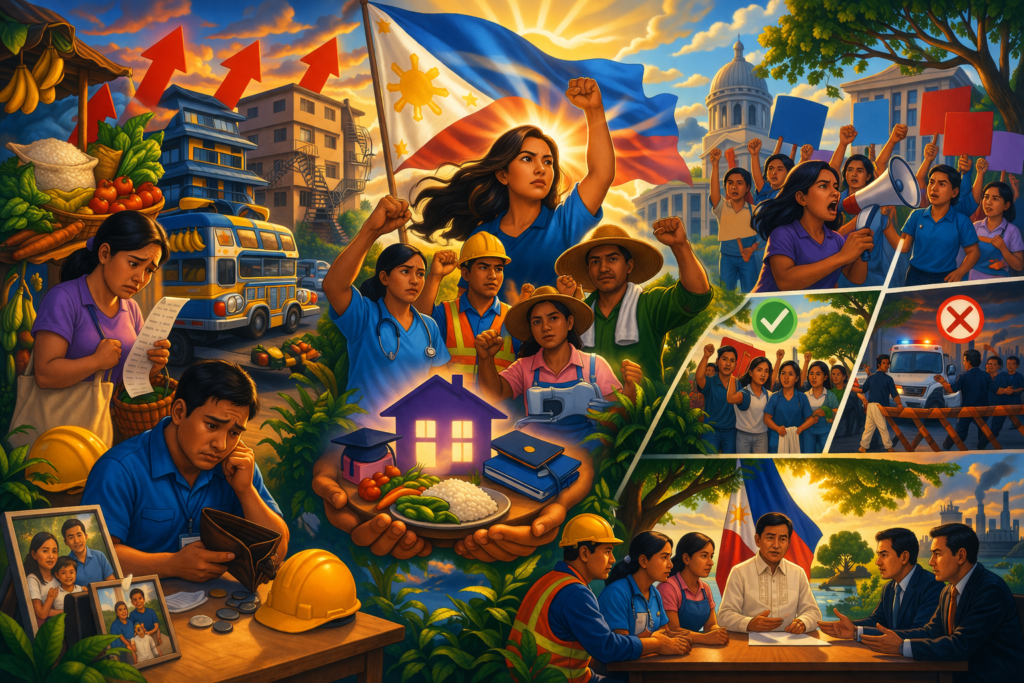
When living costs rise but wages do not, labor tension naturally follows. Philippine law responds by protecting workers, recognizing the importance of a living wage, and allowing lawful collective action. However, the law also sets clear limits. Not every grievance justifies a strike, and not every labor dispute can continue once the State steps in for the national interest.
Leave a Reply