
Love alone is not the only legal basis for marriage

In the movies, marriage is the romantic climax of a love story—a union of two hearts beating as one. In the Philippines, however, the law tells a different, much less romantic story. Under the Family Code, marriage is a “special contract” and an “inviolable social institution.” It cares very little about your feelings and very much about your legal consent.
A persistent and dangerous myth exists in our country: the belief that a “fixed marriage”—one entered into for money, immigration papers, or convenience—is not a “real” marriage. The logic seems sound to the layperson: If we didn’t marry for love, and we never lived together, surely the law doesn’t count us as husband and wife?
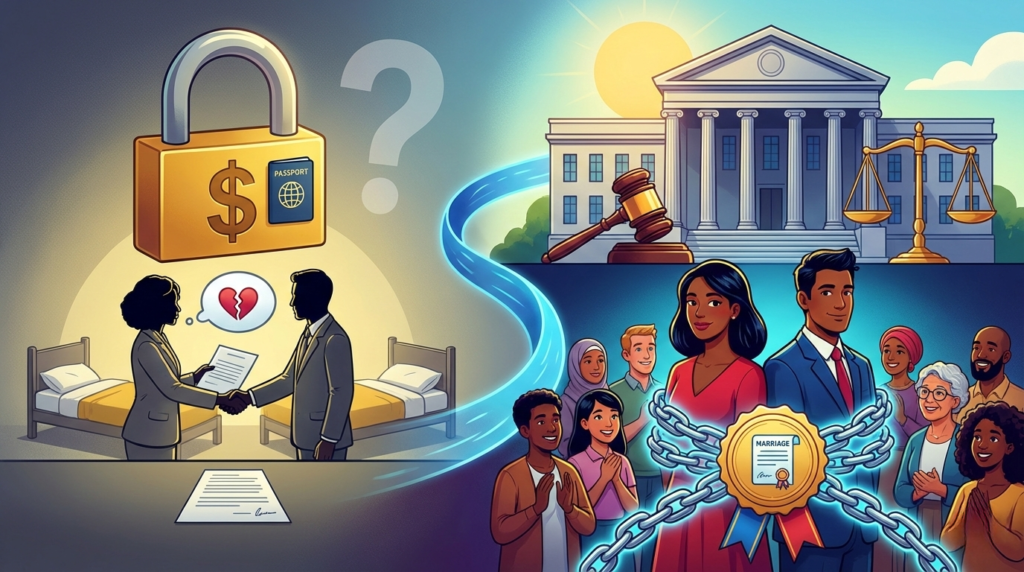
The Supreme Court, in the landmark case of Republic v. Albios (G.R. No. 198780), delivered a resounding answer that shattered this myth: Yes, you are married.
The Story of Liberty and Daniel: A Transactional Union
To understand the harsh reality of the law, we must examine the facts of the Albios case. Liberty Albios, a Filipino citizen, married Daniel Lee Fringer, an American citizen, on October 22, 2004, before a Judge in Marikina City.
It was, by Liberty’s own later admission, a purely business transaction. She married Daniel for the sole purpose of acquiring American citizenship. She even agreed to pay him USD $2,000 for his “cooperation.” The ceremony had all the formal trappings of a wedding—a valid marriage license, an authorized solemnizing officer, and the exchange of vows.
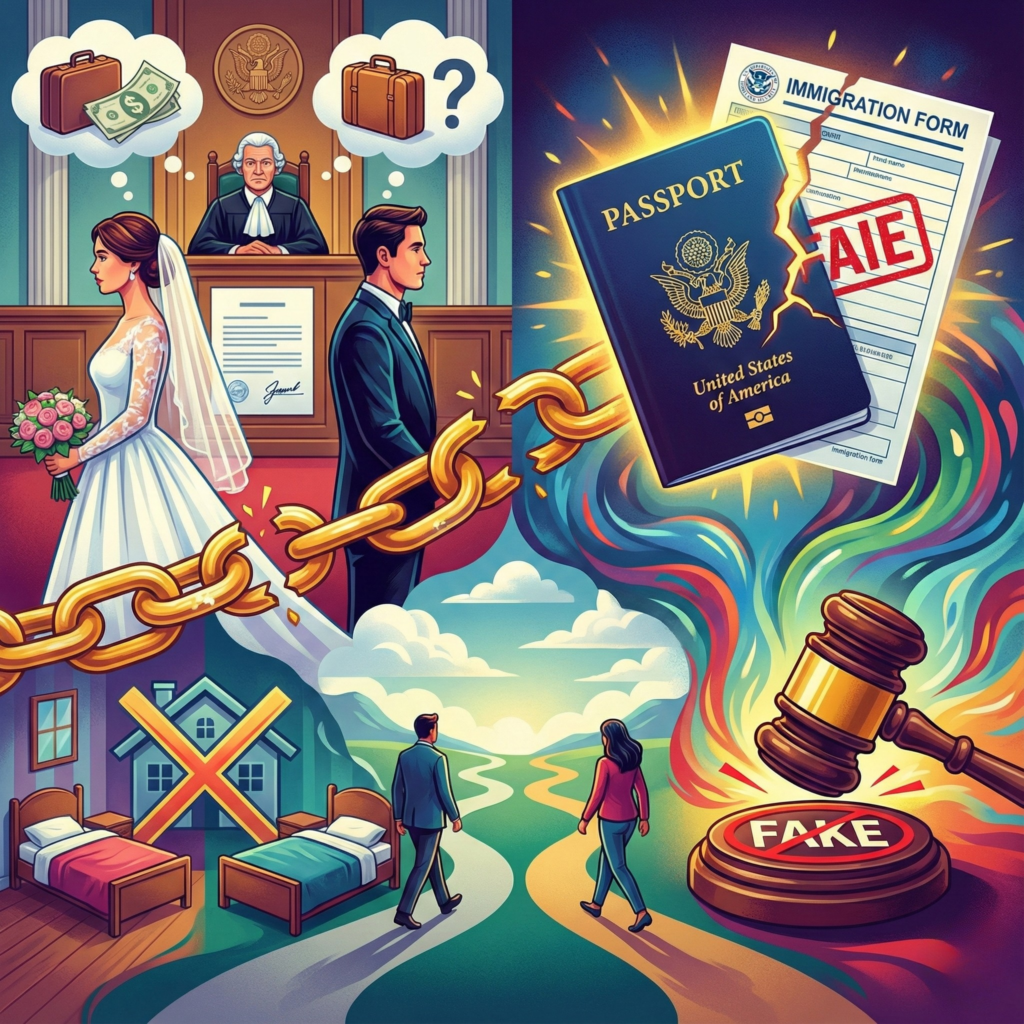
However, immediately after the judge signed the papers, Liberty and Daniel went their separate ways. They never lived together, never had a sexual relationship, and never bothered to establish a conjugal home.In fact, Liberty never even paid the $2,000 because she never processed her citizenship application. The marriage was, in every practical sense, a “sham” designed to fool the US immigration authorities.
Two years later, Liberty wanted out. She filed a Petition for Declaration of Nullity of Marriage, arguing that the marriage was void ab initio (from the beginning). Her legal theory was simple: because the marriage was for convenience and immigration purposes only, she never gave real “consent.” She argued that since they never intended to live as husband and wife, the marriage was fake.
The trial court and the Court of Appeals initially agreed with her, ruling that the lack of intent to form a family meant there was no valid consent. But the Office of the Solicitor General (OSG), acting as the defender of the institution of marriage, appealed the case to the Supreme Court.

The Legal Doctrine: Motive vs. Consent
On October 16, 2013, the Supreme Court reversed the lower courts and declared the marriage VALID and SUBSISTING.
The High Court made a crucial legal distinction that every Filipino must understand: the difference between Motive and Consent.
- Consent is the voluntary agreement to enter into the legal bond of marriage.
- Motive is the reason why you want to enter that bond.
The Court reasoned that Liberty and Daniel did consent to be married.
In fact, their consent was essential to their plan. They needed to be legally married for Liberty to apply for her American citizenship. They appeared before the judge, sworn an oath, and signed the contract precisely because they wanted the legal status of “spouses”.
Just because their motive (citizenship) was non-romantic does not mean their consent was absent. As the Court stated:
“Motive alone does not invalidate consent so long as there was understanding of the legal commitment of marriage.”
What Actually Makes a Marriage Valid?
If love isn’t a requirement, what is?
According to Articles 2 and 3 of the Family Code of the Philippines, a marriage is valid if it possesses the following essential and formal requisites:
Marriage Ceremony: The parties must personally appear before the officer and witnesses and declare that they take each other as husband and wife.
Legal Capacity: The contracting parties must be a male and a female, and at least 18 years of age.
Consent: This must be freely given in the presence of the solemnizing officer.
Authority of the Solemnizing Officer: The judge, priest, mayor, or minister must be legally authorized to perform the marriage.
Valid Marriage License: Unless the couple falls under specific exemptions (like living together for 5 years), a valid license is mandatory.
Myth 1: “It was just for papers, so it’s not real.” Fact: As Albios ruled, the “papers” were the goal, which means you intended to get married to get those papers. That intent makes the marriage valid.
Myth 2: “We never had sex or lived together, so it’s void.” Fact: Consummation (sex) and cohabitation are marital obligations, but they are not essential requisites for validity. Failure to perform them does not make the marriage void ab initio.
Myth 3: “I can just marry someone else because the first one was fake.” Fact: This is the most dangerous myth. Because the first marriage is valid, marrying a second person without a judicial decree of nullity constitutes Bigamy, a crime punishable by imprisonment.
The Consequences: Stuck in Legal Limbo
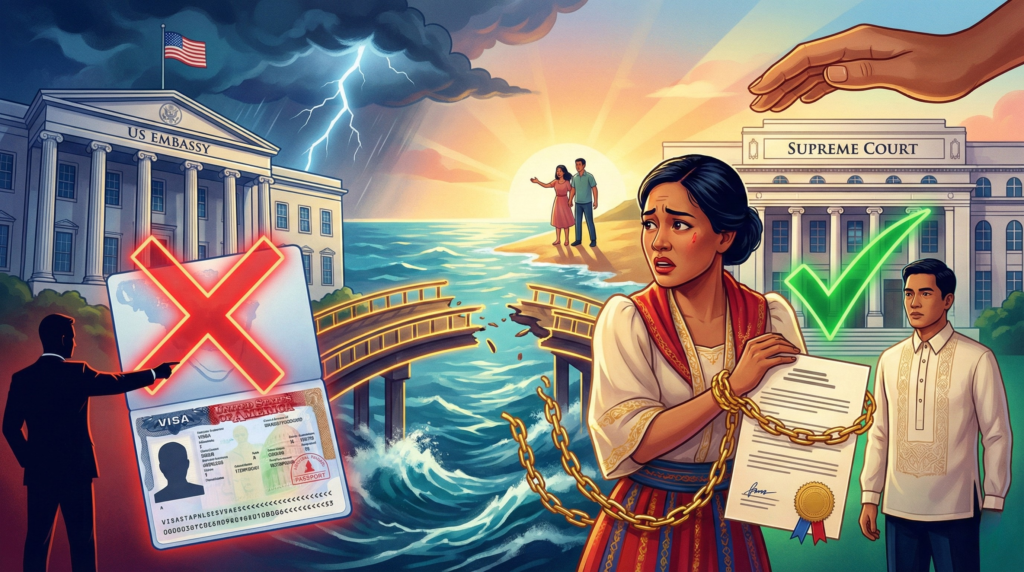
The Albios ruling creates a tragic irony for many Filipinos. The US Embassy may consider a marriage “fraudulent” (denying you a visa because it’s a sham), while the Philippine government may still view it as “valid” (preventing you from remarrying).
You might find yourself in a situation where the US or another country denies your entry, while also being unable to marry a genuine partner in the Philippines because you remain legally bound to your “fixer.”
Marriage in the Philippines is an “inviolable social institution.” It is not a casual agreement that you can discard when the transaction is complete. The Supreme Court’s decisions in Albios and subsequent cases serve as stern reminders that the law takes your vows seriously, even if you did not.
If you entered a marriage for convenience, you cannot simply walk away. You are married in the eyes of the law, with all the rights and responsibilities that entails.

Leave a Reply