
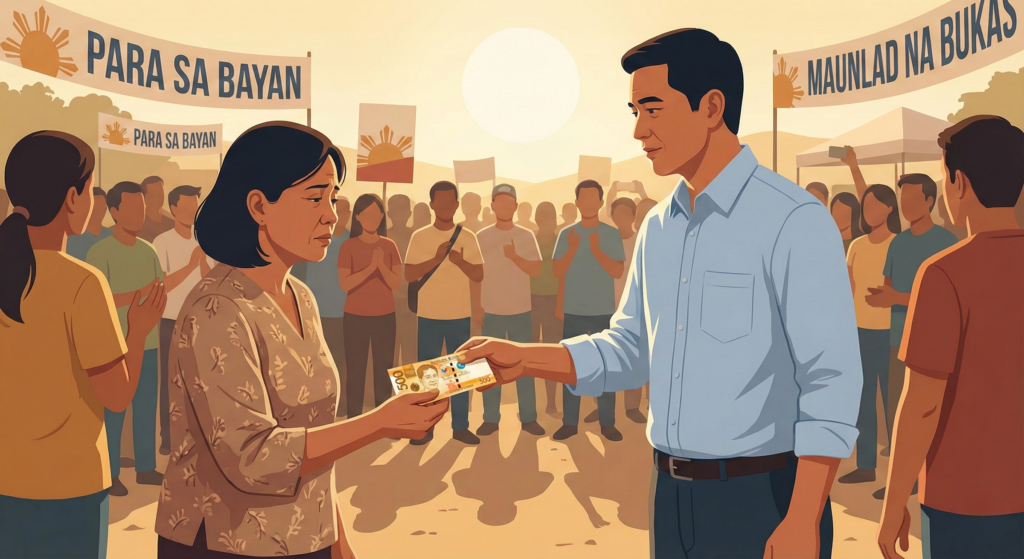
It starts innocently enough. The campaign music blares, the sun beats down, and a local leader presses a crisp 500-peso bill into your hand. They refer to it as “financial assistance,” “allowance,” or simply “ayuda.”You take it because you need it. You tell yourself, “I will take the money, but I will vote my conscience.”
Stop lying to yourself.
When you accept that envelope, you do not just sell a ballot. When your child burns with fever, you sell your right to demand a working hospital. You give up your right to a sturdy dike when the typhoon howls and the river rises. In doing so, you sacrifice your safety, dignity, and the future of your community. By doing this, you become an accomplice to the very corruption that keeps you poor.
This is not a political lecture. This is a forensic examination of a crime scene where you are both the victim and the accessory.
The Weaponization of “Charity”
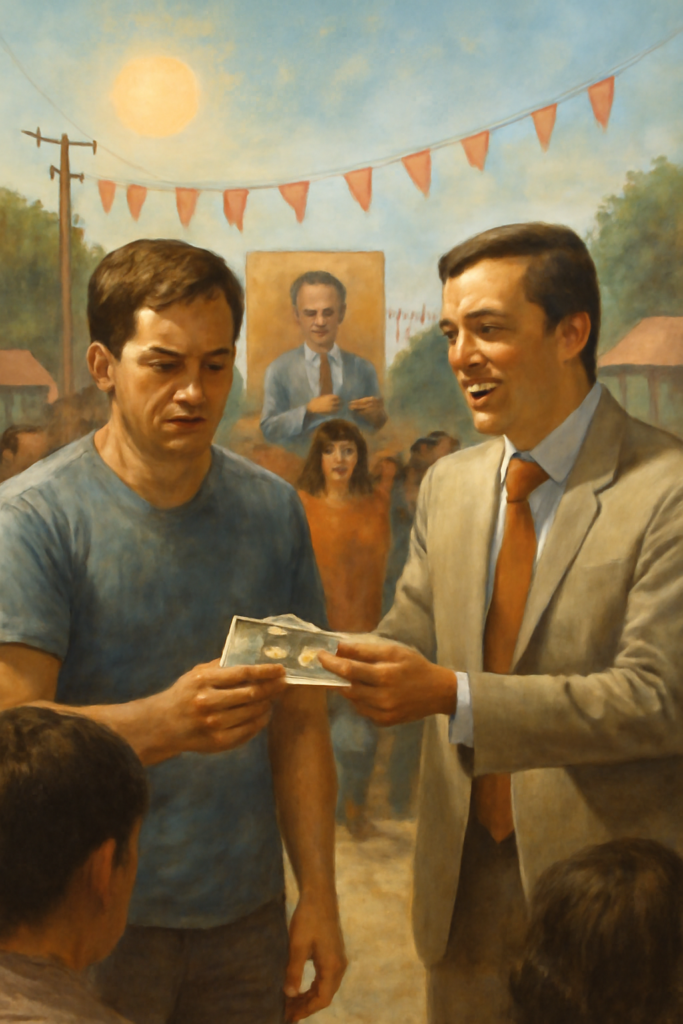
The law calls vote-buying a crime. The Supreme Court, in Nolasco vs. COMELEC, defines it as malum prohibitum—a crime committed the moment the offer is made, regardless of whether you actually vote for them. But the politicians know how to manipulate you. They weaponize your utang na loob (debt of gratitude) and treat the national treasury like their personal ATM, handing out public funds as if they were their own benevolence.
Recent jurisprudence, specifically the 2023 ruling in Rodriguez vs. COMELEC, has made this trap even deadlier. In that case, the Supreme Court ruled that a video showing a candidate distributing cash doesn’t prove vote-buying unless the recipient directly testifies that they were “induced” to vote.
Do you understand what this means? It means they can wave money in your face, call it “entertainment” or “charity,” and laugh at the law. They have rigged the system so that unless you admit to selling your vote—and risk going to jail yourself—they walk free. They have legalized bribery by hiding it behind the mask of generosity.
The Gun on the Table: The Nolasco Reality
You might think vote-buying is a peaceful transaction. It is not. It is an act of violence with a smile.
Look at the case of Nolasco vs. COMELEC. In Meycauayan, Bulacan, the “winning” candidate didn’t just have bags of money; he had a private army. When police raided his compound, they didn’t just find payrolls for voters; they found an arsenal. An Ingram M10 submachine gun with a silencer. A Galil assault rifle. A Magnum revolver.
Ask yourself: Why does a mayor need a submachine gun with a silencer? That is not a weapon for self-defense. That is a weapon for assassination.
When you take the money, you fund these private armies.By paying for the bullets that will silence your neighbor who dares to complain, you empower the warlords who rule your town not by consent, but by terror. Instead of voting, you are simply paying protection money to the syndicate that holds your town hostage.
“I will report them,” you say. Will you?
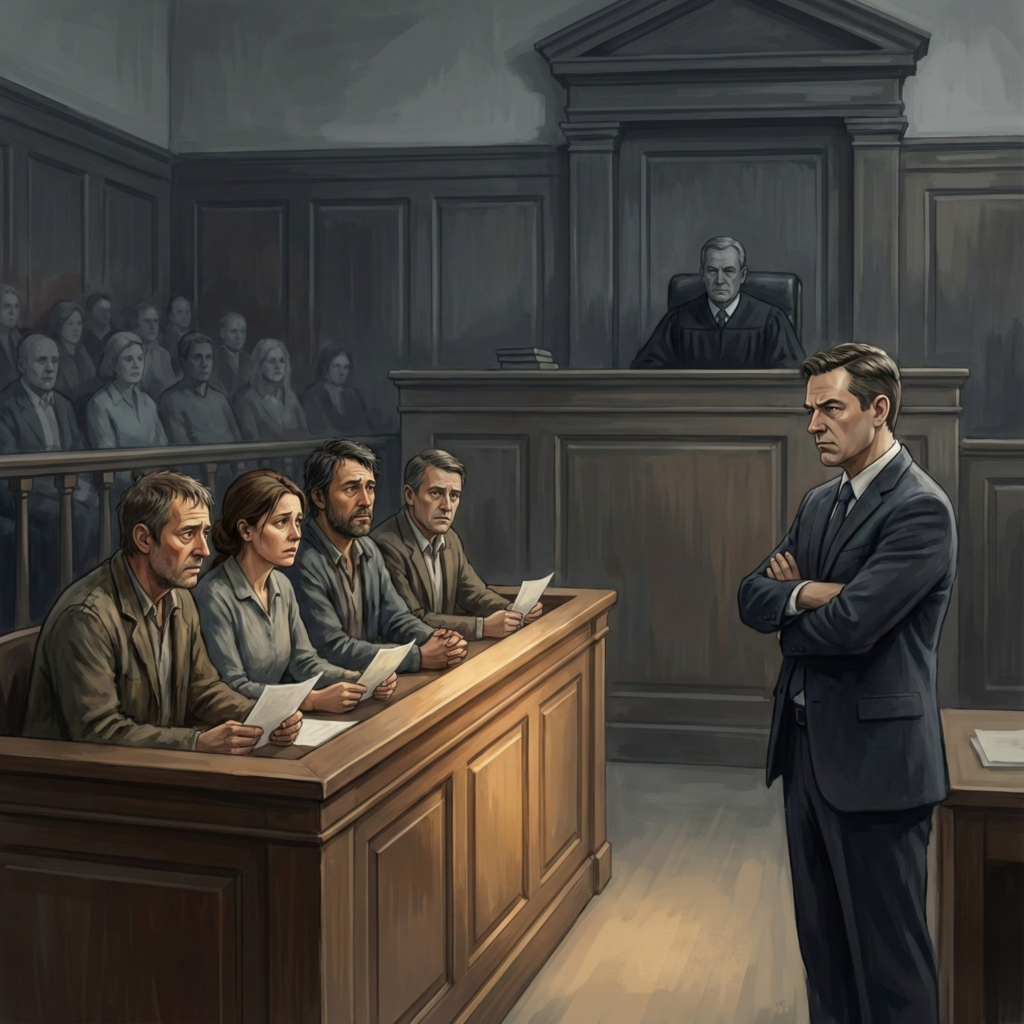
In COMELEC vs. Tagle, forty-four brave citizens in Cavite admitted they sold their votes to expose a corrupt mayor. They signed affidavits. They told the truth. And what did the system do? The provincial prosecutor—the very person supposed to protect the public—turned on them. He filed criminal charges against the witnesses for vote-selling.
The Trap: Why You Can’t Speak Up
Instead of prosecuting the buyer, the state prosecuted the poor. The message was brutal and clear: Keep your mouth shut, or we will crush you.
While the Supreme Court eventually intervened, the damage was done. The terror was instilled. This is the system you validate every time you engage in the “transaction.” You reinforce a culture where the poor are silenced and the powerful are untouchable.
The Sociological Horror of “Utang na Loob“
The most terrifying aspect of this corruption is its intimacy. It does not look like a crime. It looks like gratitude. The elite have weaponized the concept of utang na loob (debt of gratitude) to enslave the impoverished. When a politician pays for a coffin, a wedding, or a bag of rice, they create a psychological bond that transcends the law. The voter feels a moral obligation to repay this “kindness” with their vote. This is a perversion of Filipino culture. It transforms a noble value into a shackle.

The studies are clear: the poor are not stupid; they are desperate. In a country where the state has abdicated its responsibility to provide a safety net, the patron becomes the de facto government. The vote-buyer fills the vacuum left by a negligent state. But this “help” is a trap. The politician provides a fish today so they can steal the pond tomorrow.
The voter accepts the cash because the hunger is immediate, while the promise of good governance is abstract and historically unfulfilled. This prisoner’s dilemma forces the rational individual to make a choice that guarantees collective suicide. You take the money because if you don’t, your neighbor will, and the corrupt official will win anyway. You might as well eat today before you starve tomorrow.
The “Sobre” System: Retail Corruption
In the barangays, local ward bosses run the operation with the precision of a logistics company. These “leaders” maintain the “lists,” which serve as the ledgers of the damned. They categorize voters into the loyal, the wavering, and the hostile. They distribute the sobre (envelope) house-to-house in the dead of night, a practice known as gapangan (crawling). This intimacy fuels the terror. The leader knows where you live, how many children you have, and whether you took the money.
To ensure compliance, politicians use the “stub” system. They give a sample ballot with carbon paper or a specific marking to the voter. The voter must return the “proof” to receive the full payment. This strips the voter of the secrecy of the ballot. You do not vote; you fulfill a contract. If the precinct results do not match the number of envelopes distributed, the leader faces the wrath of the patron. This pressure flows downward, manifesting as threats against voters who “betrayed” the transaction.
The “Ayuda” Economy
The most insidious form of vote-buying involves the politicization of state resources. Politicians time the distribution of DSWD aid, TUPAD emergency employment, and other social welfare benefits to coincide with the campaign. They claim credit for taxpayer money: “This rice is from the Mayor,” “This medicine is from the Congresswoman.” This lie kills. It transforms rights into privileges that politicians can revoke. If you oppose the Mayor, you do not just lose a patron; you lose access to the state itself. Politicians strip you of your citizenship and reduce you to a subject.
We cannot discuss vote-buying without discussing the gun. In the Philippines, they are twin sisters. If money is the left hand of the dynasty, violence is the right.
Nolasco vs. COMELEC: The Arsenal of Democracy
In the 1995 Meycauayan, Bulacan elections, the winning candidate, Florentino P. Blanco, didn’t just buy votes—he occupied the municipality. Blanco’s residence revealed a terrifying cache of unlicensed high-powered firearms: weapons designed for assassination, not defense. This “private army” ensured that the distribution of envelopes was not voluntary; it was a tribute extracted at gunpoint.
While the Supreme Court ultimately disqualified Blanco, the sluggishness of the justice system allowed the political machine to survive. The electorate, terrorized and bribed, did not get a “do-over.” The political apparatus remained intact, ready to serve its next master.
COMELEC vs. Tagle: The Silencing of the Lambs
In 1998, 44 brave voters from Kawit, Cavite, admitted they sold their votes. This should have been an open-and-shut case. However, the incumbent mayor’s camp filed counter-charges of vote-selling against the whistleblowers, and the provincial prosecutor, deputized by COMELEC, acted as the defense attorney for the mayor. This systemic sabotage of truth made it clear: speaking out could land you in jail. Laws like Republic Act No. 6646, which grants immunity to whistleblowers, were rendered meaningless by the local prosecutor, controlled by the political elite.
Rodriguez vs. COMELEC: The Impunity of “Charity”
The case of Rodriguez vs. COMELEC (2023) illustrates how evasion methods have grown more sophisticated. Video evidence showed cash being distributed at a rally, clearly suggesting vote-buying. But the Supreme Court, in a ruling that effectively legalized vote-buying, ruled that the money could be “charity” or “entertainment”—a farce of a defense. This ruling sets an impossibly high bar for proving vote-buying. Without direct testimony from the recipients, the law protects those who would buy votes under the guise of charity or aid. However, the most insidious form remains the politicization of state resources. Public funds meant for disaster relief, health services, and social welfare are distributed during campaigns, and candidates take credit for them. The result is a society where aid is conditional on political loyalty—if you oppose the mayor, you lose your access to public services.
Common Misconceptions About Vote-Buying
Myth 1: “Vote-buying only occurs when money is exchanged.”
Fact: While money is a common form of vote-buying, the law also covers giving other types of inducements. Politicians can offer goods, favours, promises of future benefits, or even employment opportunities. Any attempt to influence a voter’s decision through material incentives, regardless of form, qualifies as vote-buying. Cash is just one part of a broader system that manipulates voter behaviour for political gain.
Myth 2: “If a voter accepts the money or gift, the case is automatically closed.”
Fact: Accepting a bribe does not automatically confirm that vote-buying occurred. To prosecute successfully, the prosecution must present clear evidence that the bribe aimed to influence the vote. Even if a voter accepts the money or gift, it does not prove their vote was bought. The intent behind the offer—whether it sought to sway the vote—is crucial. The prosecution bears the burden of proof, linking the inducement to the voter’s decision.
Myth 3: “Vote-buying is only a problem in rural or impoverished areas.”
Fact: Although vote-buying may be more visible in rural or poorer regions, it does not stay confined to these areas. Urban centres, with their dense populations and higher political stakes, face similar issues. Politicians may use different methods in urban settings, such as digital transactions or indirect promises, but vote-buying remains widespread across the country. The urban poor, for example, may face targets through promises of housing, employment, or cash assistance during elections.
Myth 4: “Vote-buying is a problem only during elections.”
Fact: Vote-buying extends beyond election day itself. Politicians often lay the groundwork for vote-buying months before the election, during campaign rallies, distribution of “charity,” or state welfare programs. Election-related “gifts” often circulate months before voting day as part of a long-term strategy to influence voters’ choices. This practice distorts the electoral process well beyond the voting booth, perpetuating a cycle of patronage and manipulation throughout the year.
Myth 5: “Politicians involved in vote-buying are always prosecuted and punished.”
Fact: Despite being illegal, vote-buying rarely leads to full prosecution. Legal loopholes, political influence, and a lack of evidence often prevent accountability. Even with proof of vote-buying, the judicial system moves slowly, and punishments rarely deter future offenses. The “fat dynasties” dominating Philippine politics can often shield themselves from legal consequences, making it hard to break the cycle of electoral corruption. As a result, while the law bans vote-buying, the system is so entrenched that perpetrators frequently avoid punishment.
Stop the Bleeding
We cannot discuss vote-buying without discussing the gun. In the Philippines, they are twin sisters. If money is the left hand of the dynasty, violence is the right. You cannot embrace one without shaking hands with the other. The Supreme Court has warned us. The laws are there. But the law is a piece of paper; it cannot stop a bullet, and it cannot stop a flood. Only you can do that.
Be scared. Be terrified of the consequences of your action.
When you sell your vote, you surrender your sovereign power. By telling the politician, “I can be bought,” you demand, “You don’t need to serve me; you only need to pay me.” By doing this, you accept that your child will drink dirty water, your street will flood, and your concerns will go unheard.
Do not tolerate this. Do not participate. Break the cycle before it kills you.
Please remember that this post is intended for general informational purposes only and does not, in any way, constitute legal advice. Every situation is unique, and you should always consult a qualified lawyer for professional advice regarding your specific concerns. The scenarios and examples provided in this article are purely fictional and for illustrative purposes only and are not based on any actual case or controversy.
Leave a Reply